The Experience
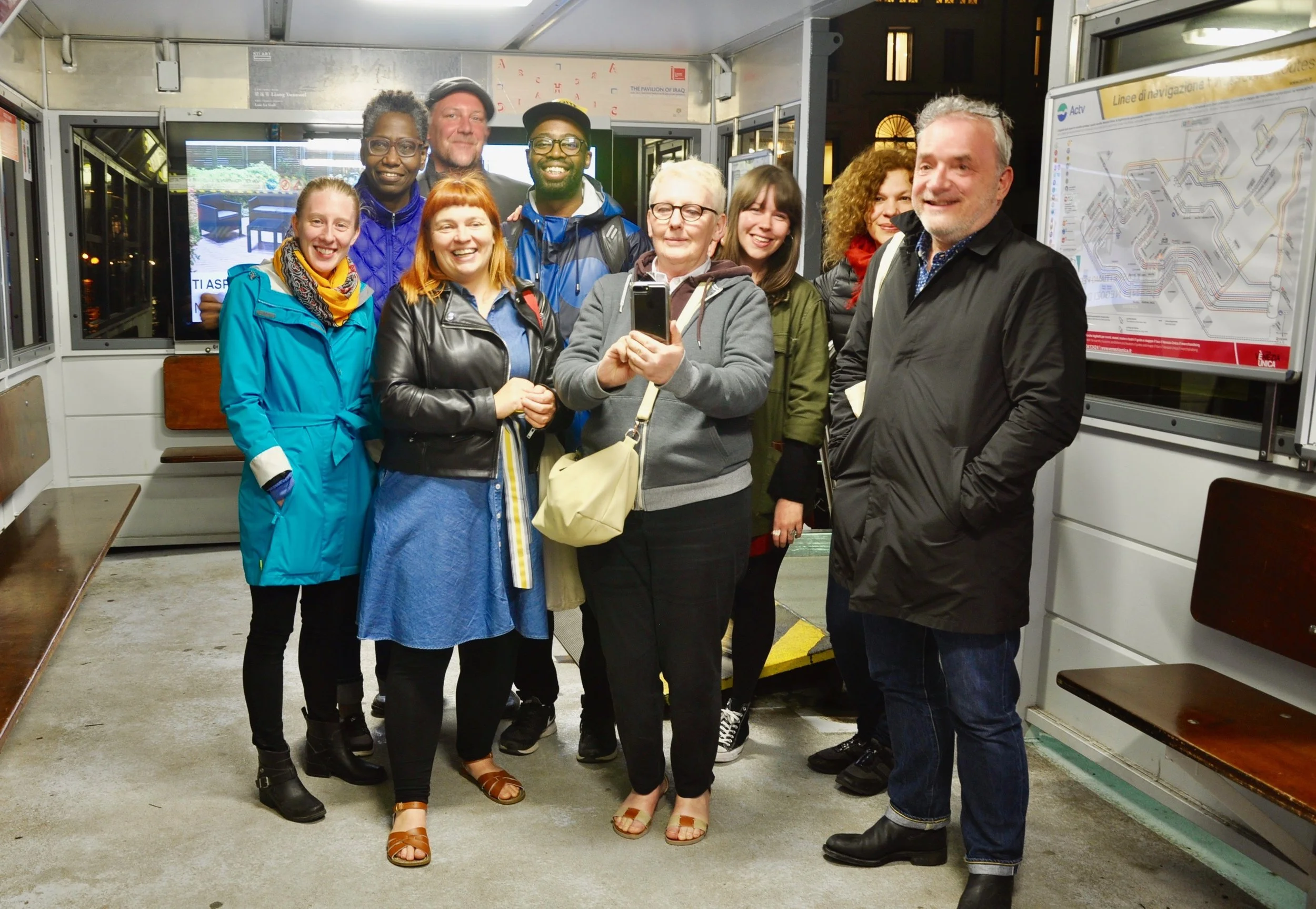
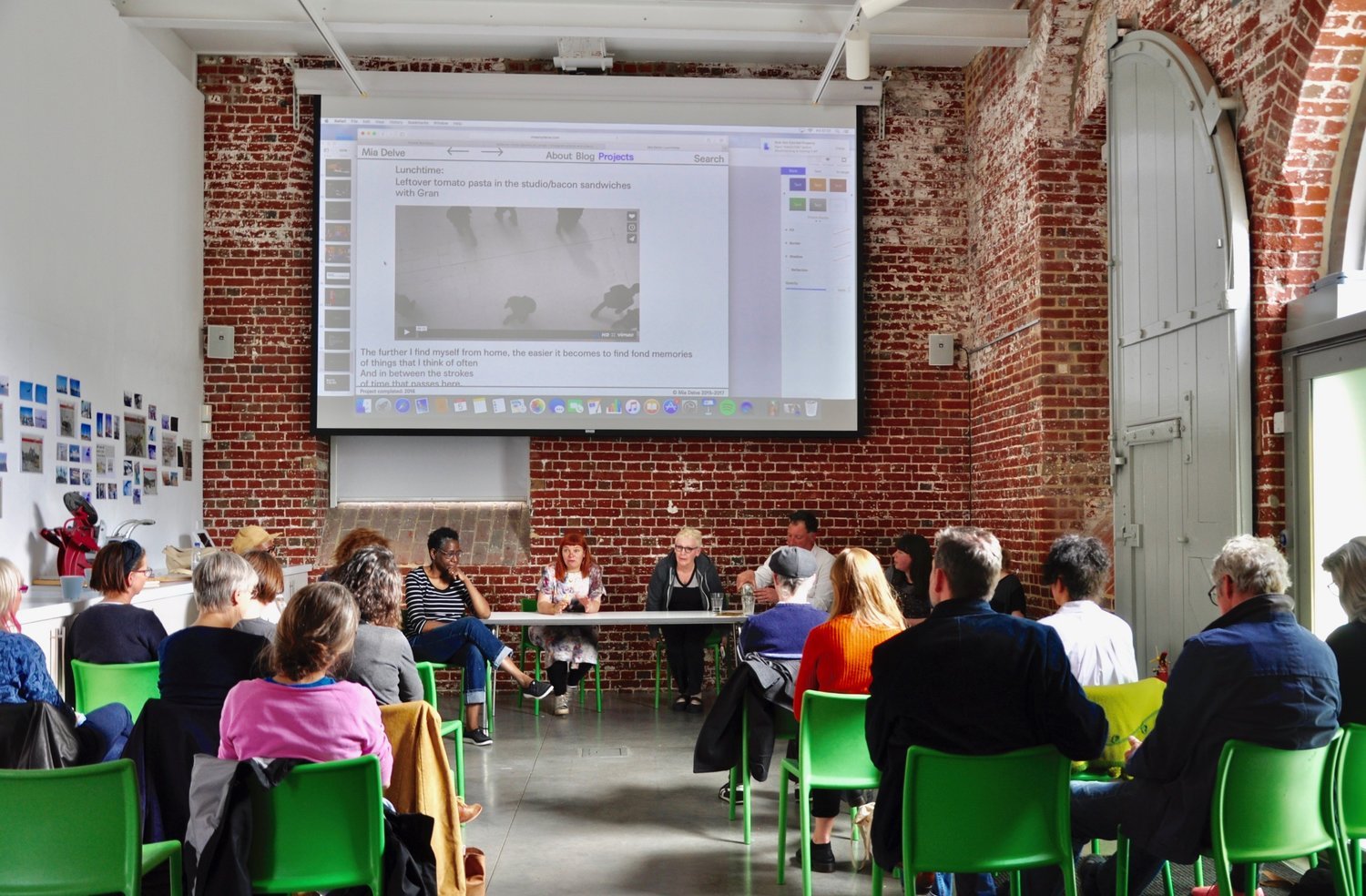
In May 2017, six established, mid-career and emerging artists from England and the United States, and three curators, gathered in Portsmouth, England and Venice, Italy for the Biennale. The group worked in conjunction with Aspex Gallery and Syracuse University.
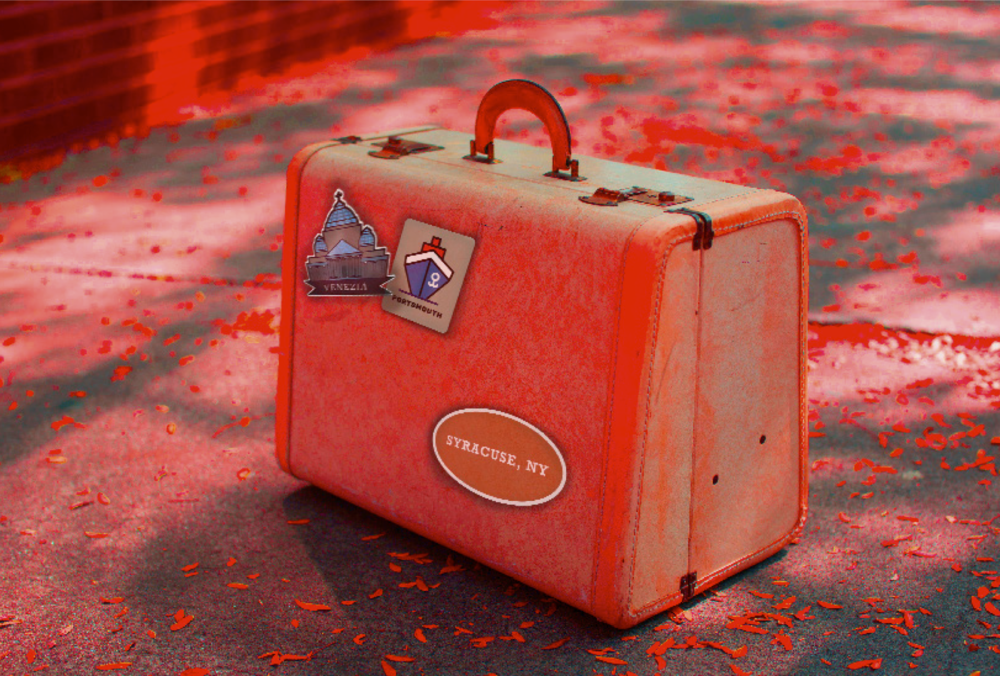
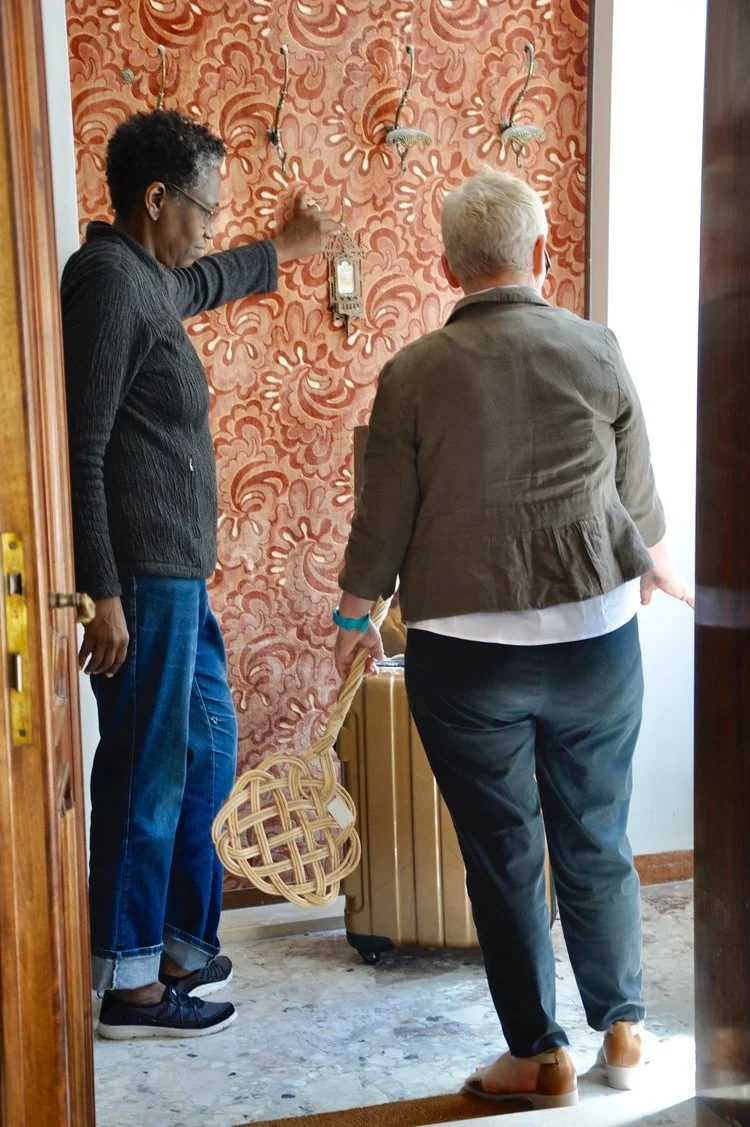
In Portsmouth, England, each artist hosted workshops relating to their practice. The group then traveled to Venice, Italy to make site specific work, transporting their materials and supplies in suitcases.
THE WORKSHOP - ICEBREAKERS
A few weeks before flying out, the workshops were finalized. I was to lead a workshop for a self-help group consisting of adults battling addiction, post-incarceration, grief and disability. I was both eager and nervous for the workshop. I knew it had enormous potential to influence my current social practice, but all the new variables also heightened my anxiety.
My current work is rooted in social practice; I have created several experimental situations requiring participation in a group or communal activity. These situations or experiences force participants to make decisions in regards to communication and interaction. These projects investigate the verbal and non-verbal ways of communication in new and unfamiliar situations in an effort to deconstruct and understand how we connect and relate to one another.
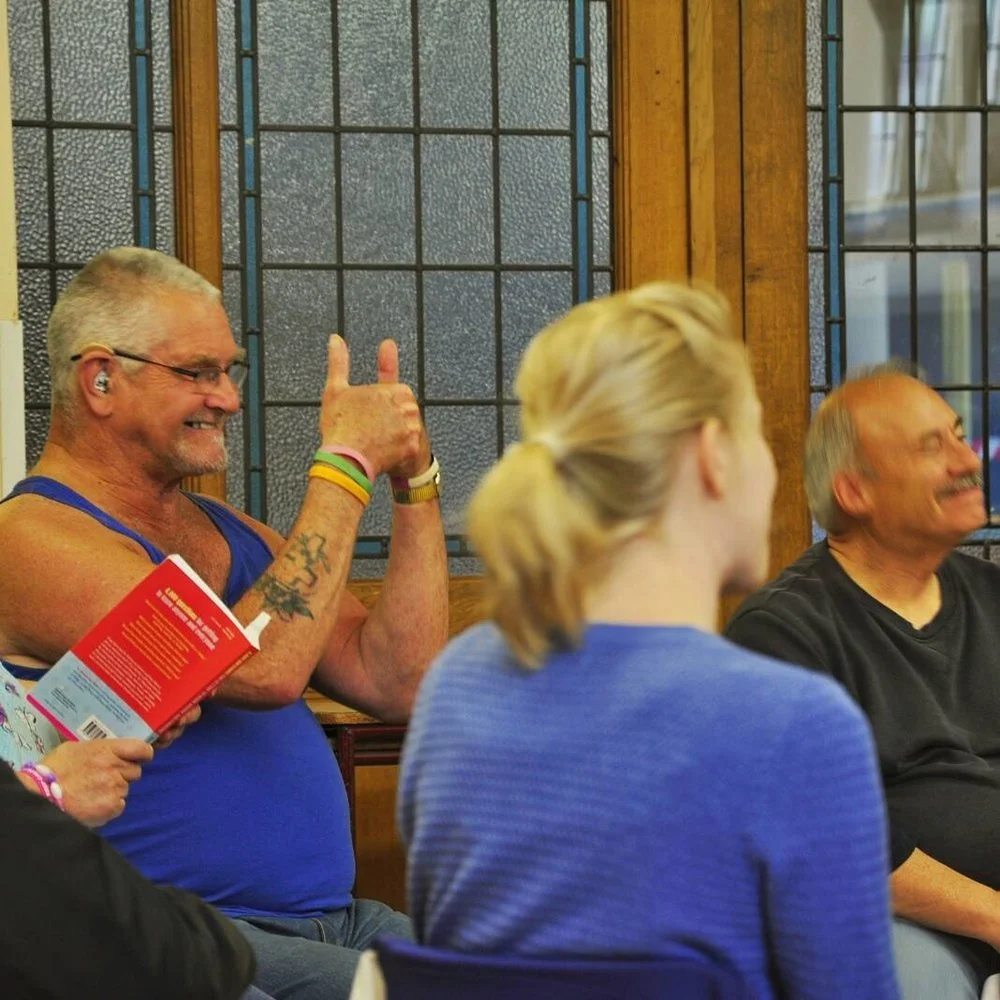
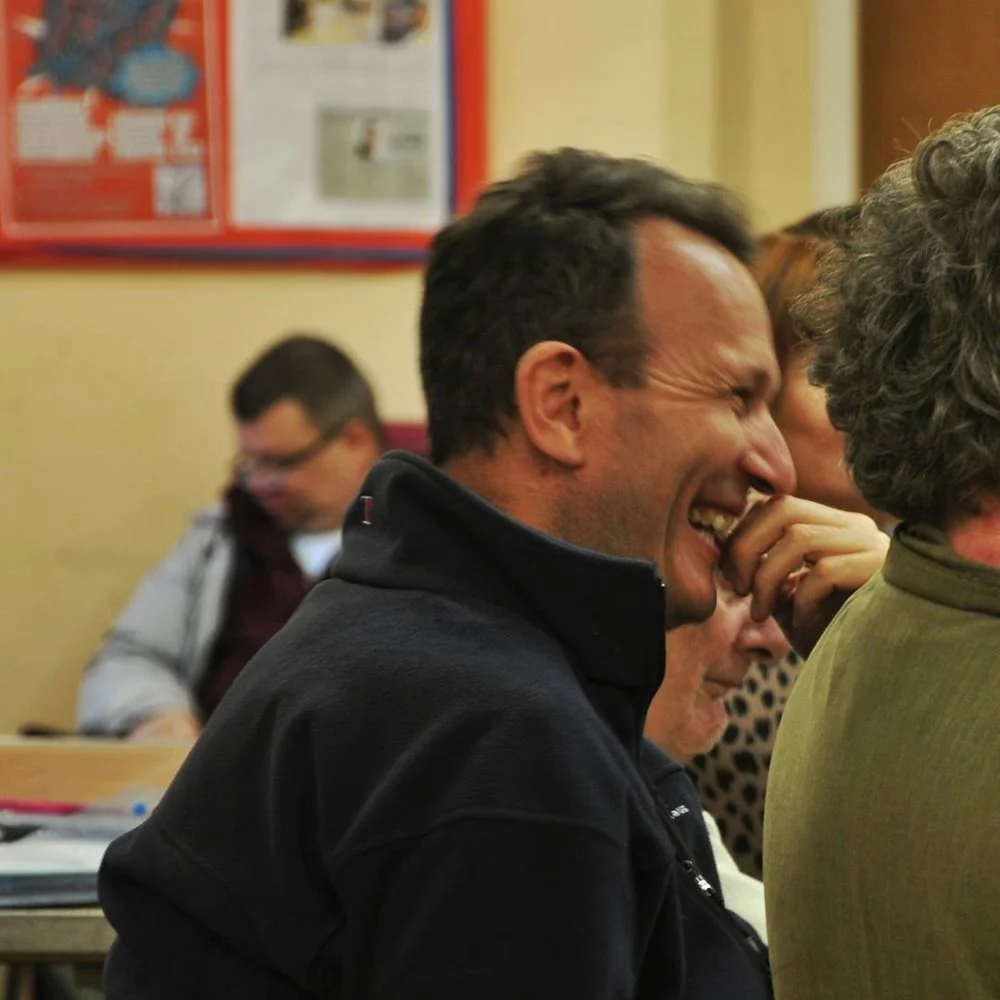
For my workshop, I created an experience based around the idea of an icebreaker. An icebreaker is defined as “a thing that serves to relieve inhibitions or tension between people, or start a conversation.” The workshop involved roughly thirty participants and lasted approximately four hours. For the first half of the workshop, I talked individually with people about communication and the comforts and struggles that go along with opening up to others. In the second half of the workshop, I invited individuals to participate in a Question and Answer experience.
We proceeded to sit in a circle, and read aloud, one at a time, questions from the book “4,000 Questions For Getting To Know Anyone and Everyone” by Barbara Ann Kipfer. The questions were silly and lighthearted, in hopes of easing tensions and providing a comfortable and relaxed atmosphere. After a question was read, the participants would answer the question out loud, in unison.
At the conclusion of the workshop, the responses were enthusiastic and positive. Many participants opened up and shared- thanks in part to a book of unassuming, goofy questions. The workshop disengaged anxieties about communicating with others because it provided the opportunity for power and control - through the act of holding the book, choosing a question, and reading the question aloud. Answering the questions simultaneously took the pressure off of the individual and placed them in the experience as parts to a whole.
The workshop in England was the first participatory experience I had done outside of an American university setting. The demographic was broad and varied, and this was the first time I was the outsider – the other. I was also unsure of the sensitivity and willingness of the group, especially since I had previously worked with only students and artists. As the facilitator in this experimental situation, I chose an icebreaker activity to ease the tensions and predispositions I was feeling about leading a workshop overseas to a group of strangers. Working in England, I did not have to overcome a language barrier, and an activity involving verbal communication and sharing was a suitable choice. Like my past projects, this workshop involved individual participation in a group activity, while adhering to a simple set of parameters. The individuals in the experience had to choose whether to just observe or to open themselves up and share.
THE NEW PROJECT -
WALKING WITH STRANGERS
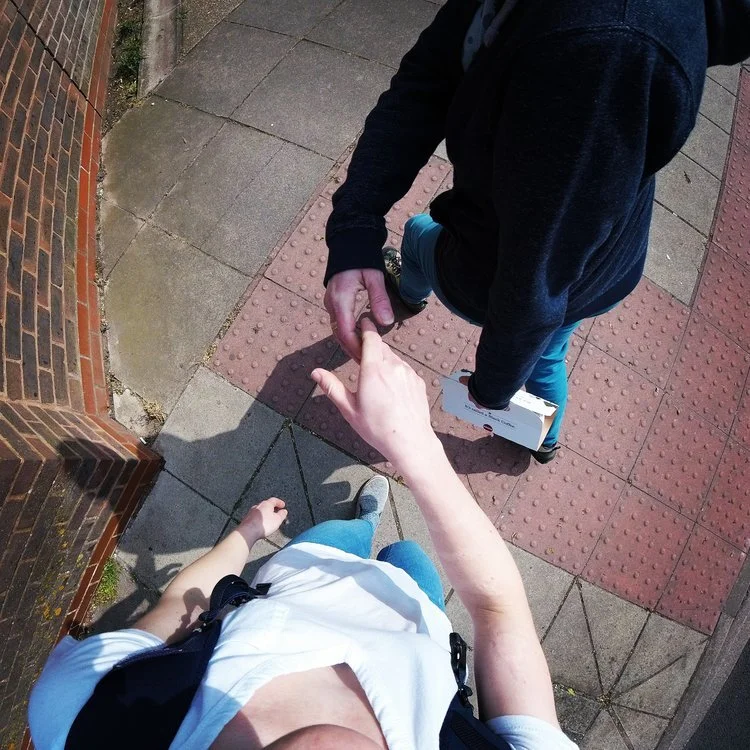
While in England, I also performed a social experiment I have dubbed Walking With Strangers. I was operating as an isolated individual attempting to infiltrate the public sphere- trying to interact and communicate with strangers. I fixed a small Go Pro camera to my baseball cap and walked the streets of Portsmouth for two consecutive days, three hours each day. The camera was facing down, aimed at my feet-it was only filming my personal space.
There was traffic on the streets and fair amounts of pedestrians. As I walked toward people, I would introduce myself, sometimes as an artist and student other times I would just asked if I could walk with them. I asked close to a hundred people, and only one person let me walk with them. Most people would walk away from me quickly and didn’t say anything at all. A few people actually turn and ran away from me.
My goal with this experiment was to see if I could penetrate societal boundaries, as a petite, white female approaching people in public in broad daylight. Being approached by a stranger on the street comes with criminal connotations or at the least, of being homeless. Walking With Strangers, in many ways, stripped me of my privilege and denied me access to others.
Since the workshop in England and Walking With Strangers, I have been thinking about the tension, anxiety and discomfort that often surround our interactions with strangers. This fall, I am participating in the Turner Semester Residency in Los Angeles, California. Through the Museum of Latin American Art, I have worked on Tania Brugera’s project and campaign The Frances Effect. This participatory project, involving postcards, social media, and hashtags, is directed at the Pope and Vatican City requesting change to immigrant status and citizen rights of undocumented migrants.
While working on Brugera’s project, I have communicated with many migrants from all over the world, specifically Latin America. I have asked them several questions: Why did they leave their homeland? Who came with them? Was it was hard to leave? Did they feel like they still had connections/ties to their place of origin? On Many occasions these questions lead to stories.
THE EVOLUTION OF THE EXPERIENCE & A NEW BODY OF WORK
In And Everybody Felt The Same, (a new piece that is part of a new body of work) I used one piece of red rip stop fabric to make a double-ended raincoat. The coats are connected with thirty feet of fabric that stretches out across the gallery floor. Glowing forbodingly, And Everybody Felt The Same, viscerally describes the tension and unease of dislocation, resettlement, and communication. Despite cultural, ethnic, and geographical differences, my interactions with both the self-help group in England and the migrant participants in Brugera’s project were strikingly similar. Interacting and connecting with strangers is often anxiety laden, especially in an unfamiliar place.
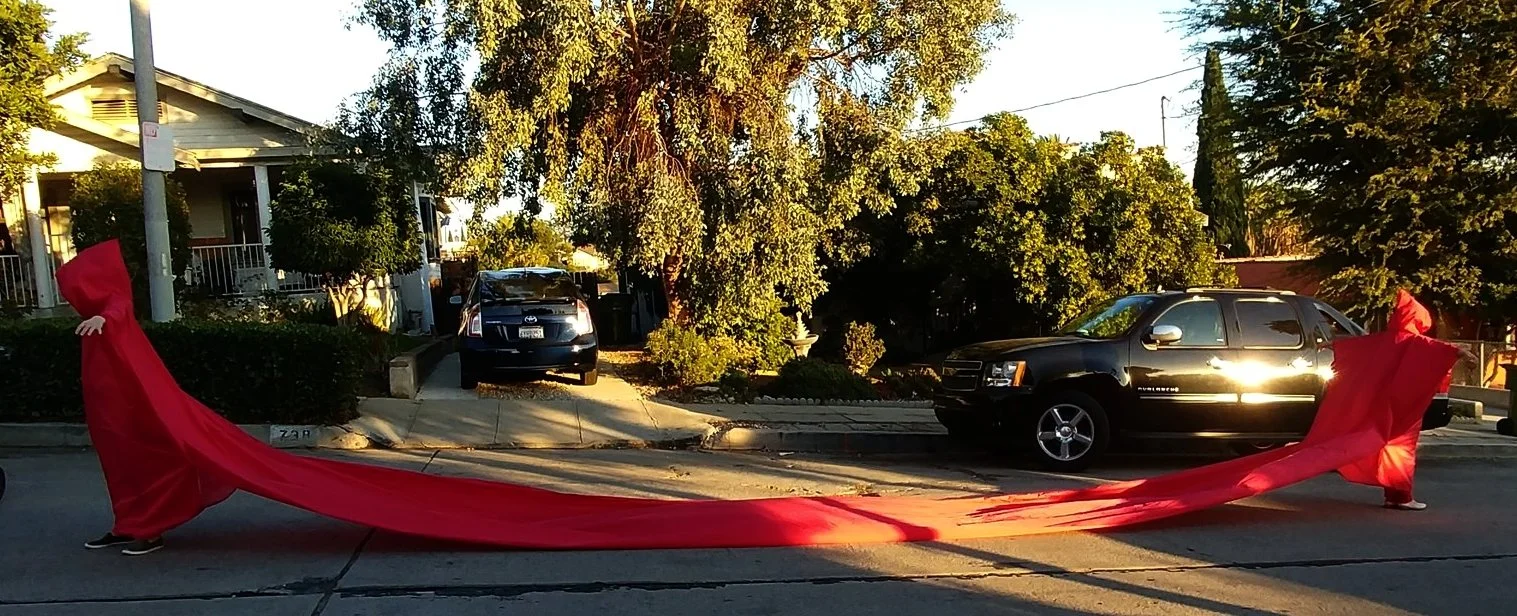
[in progress image of the new work, And Everybody Felt the Same -- Silver Lake, California 9.28.2017]
BOITE-EN-VALISE EXTRAS:
Venice, Italy -- May 2017
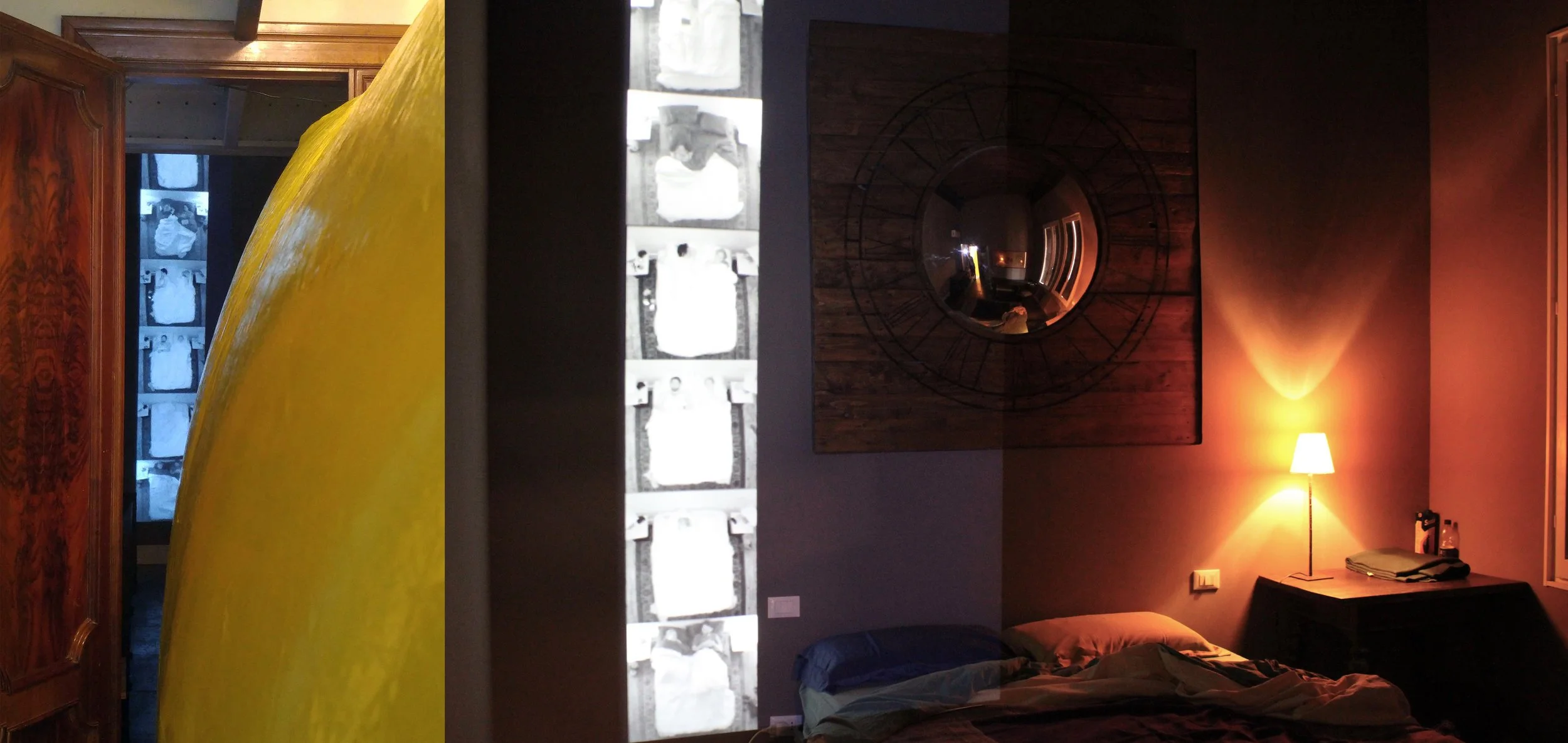
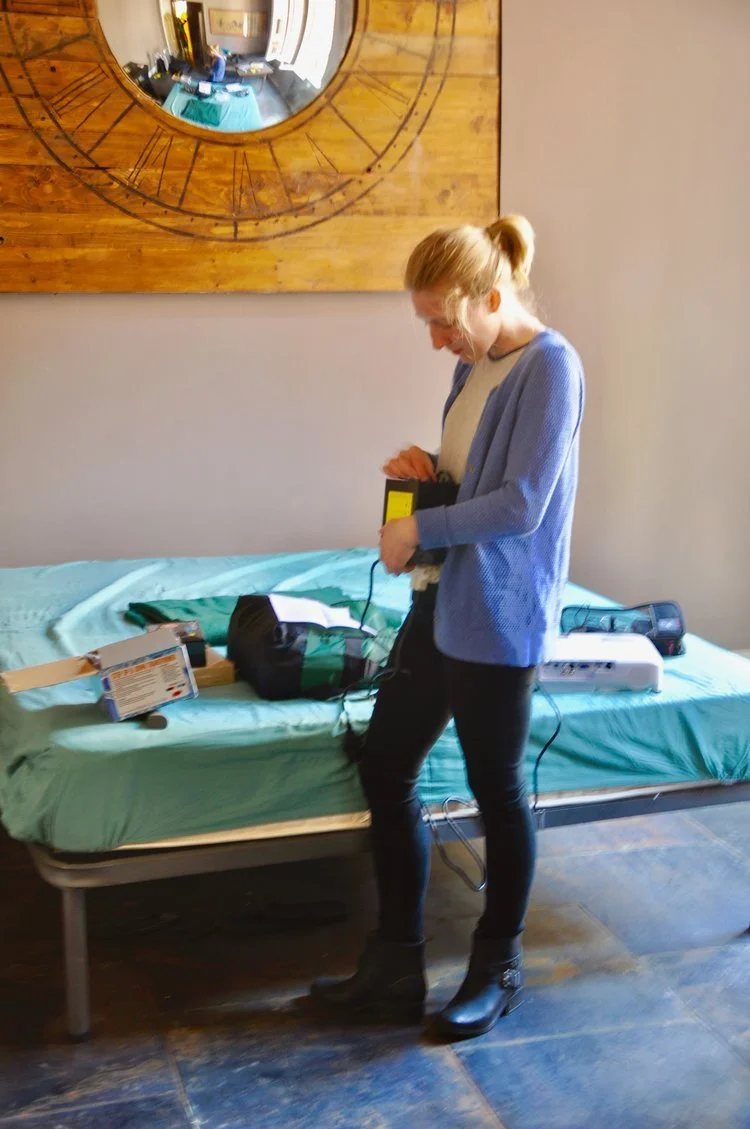
SICK BED was a response to falling ill while traveling internationally. Taking an outing to the local doctor proved I had a very progressed case of tonsillitis.
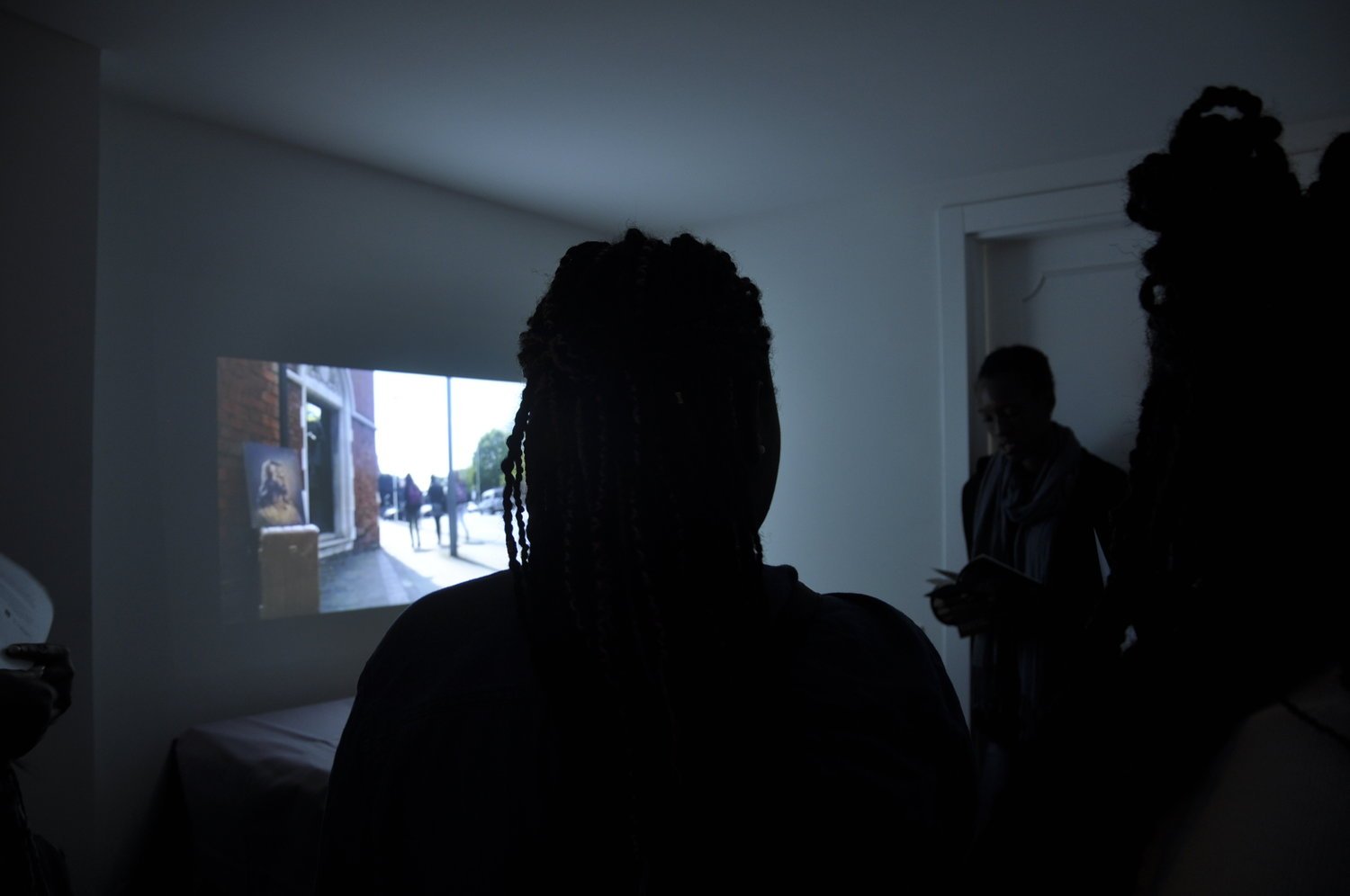
Projecting an edited video of The Sleep Project along the wall next to the bed where I rested and slept throughout the duration of the exhibition in Venice, I was able to continue to explore vulnerability, behavior, and comfort while still interacting with the people that passed through the space.
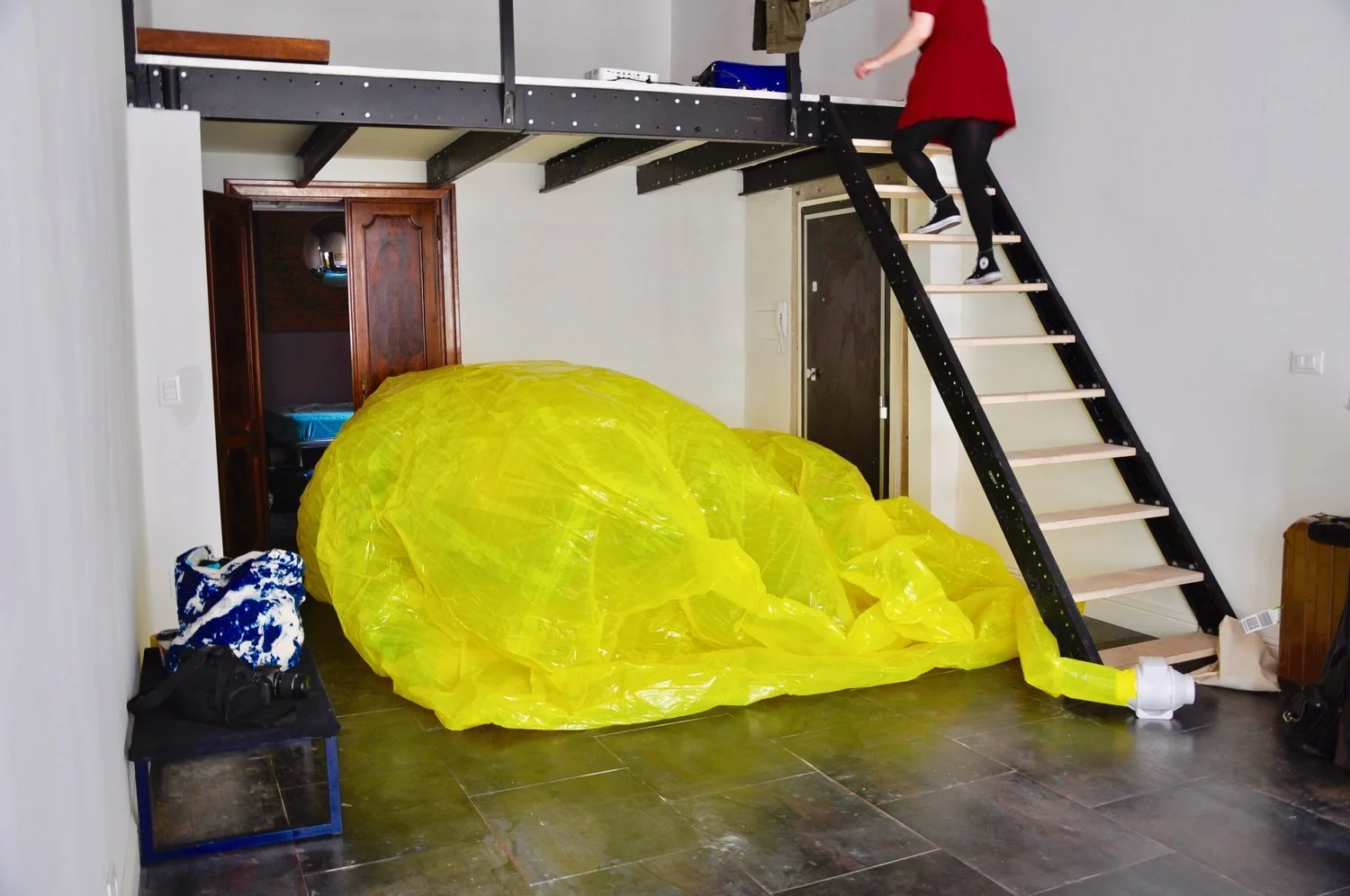
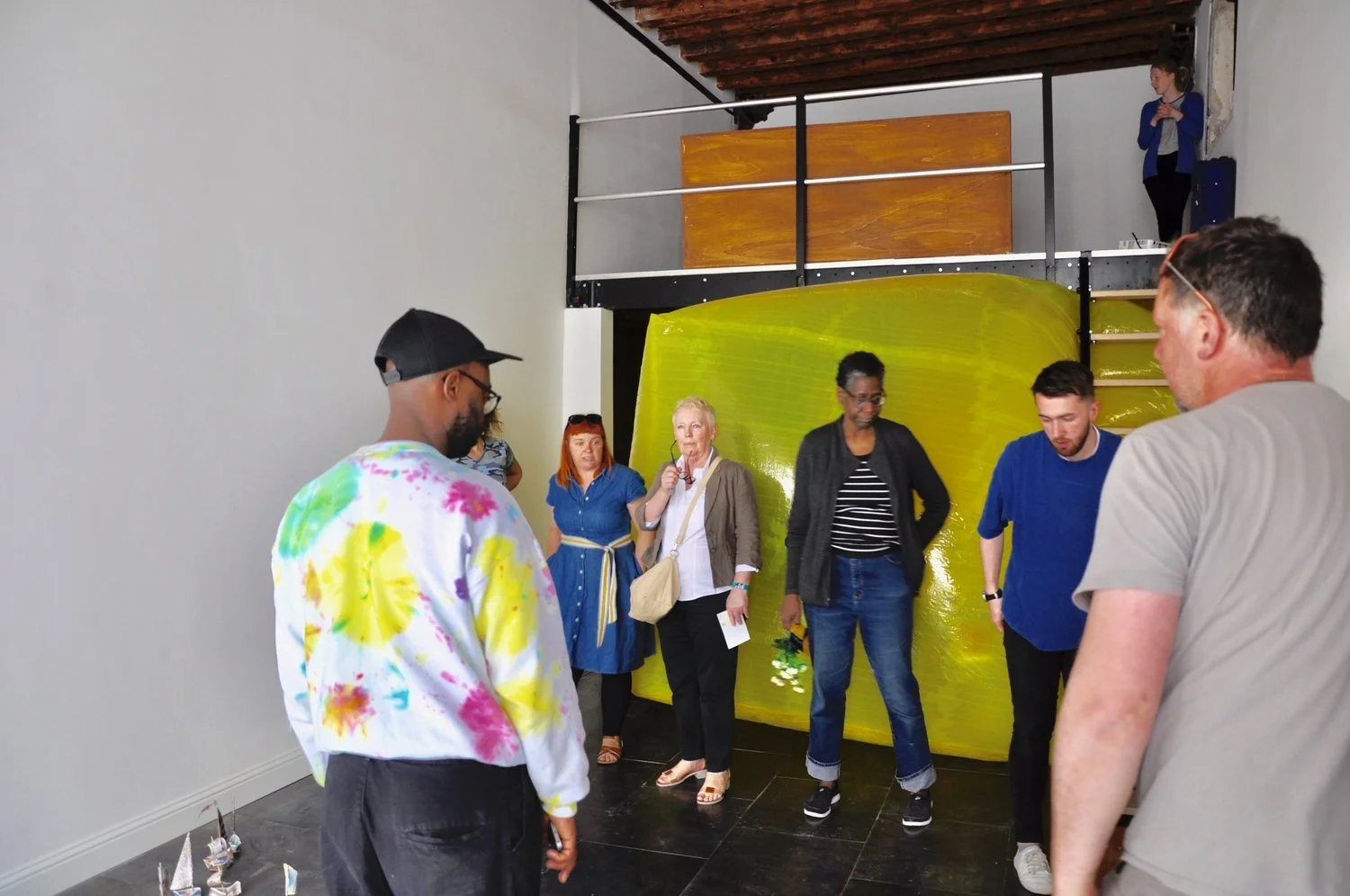
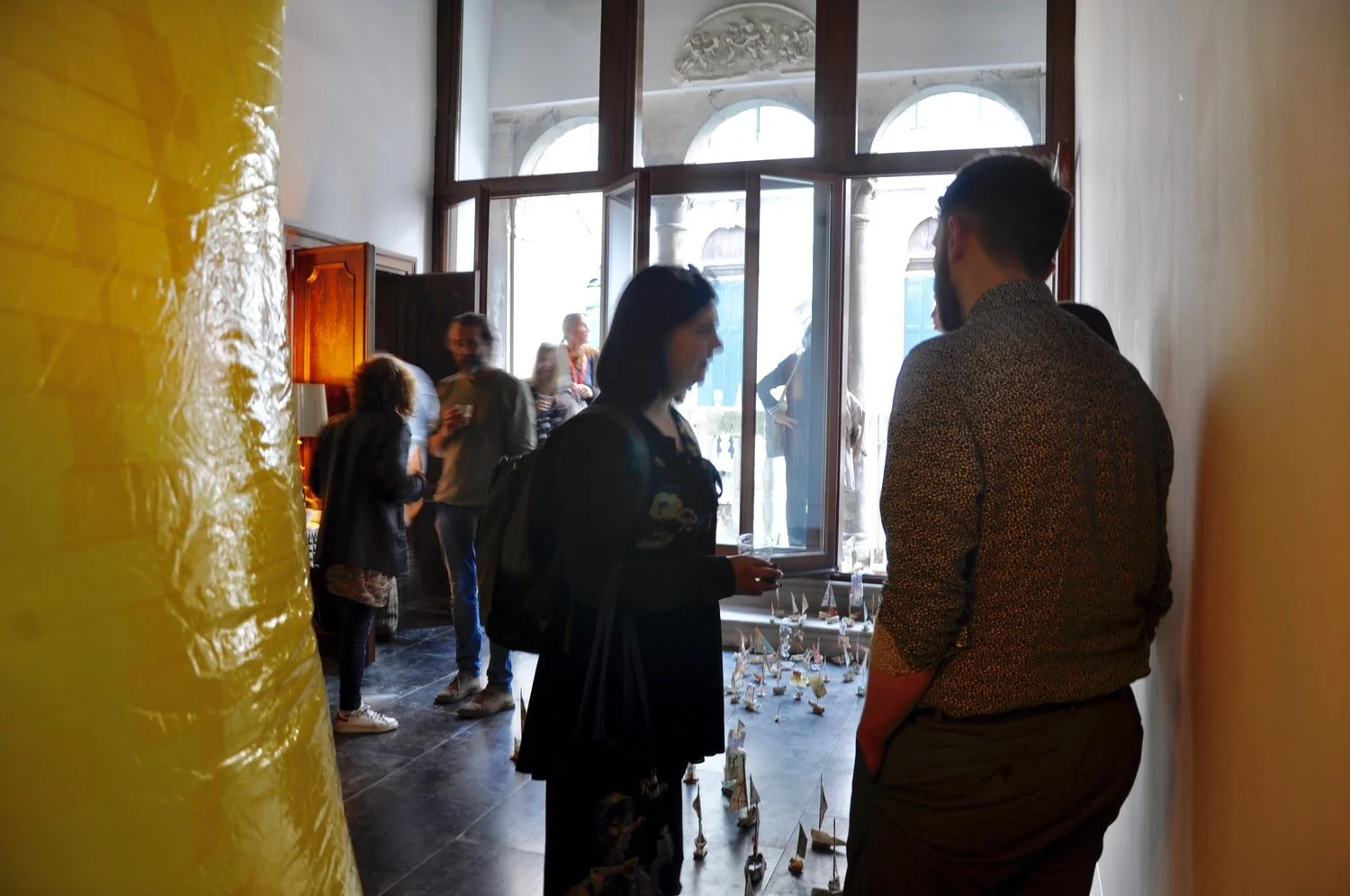
How the viewer accessed the room was a significant part of the performance as well. Tom Hall had an inflatable installation, Boy on the Beach, which made the entrance to the room I was in a tight passageway for the viewer to squeeze through. You could see the projection from the other room, but you had to choose to squeeze into the room to realize someone was resting in the bed.
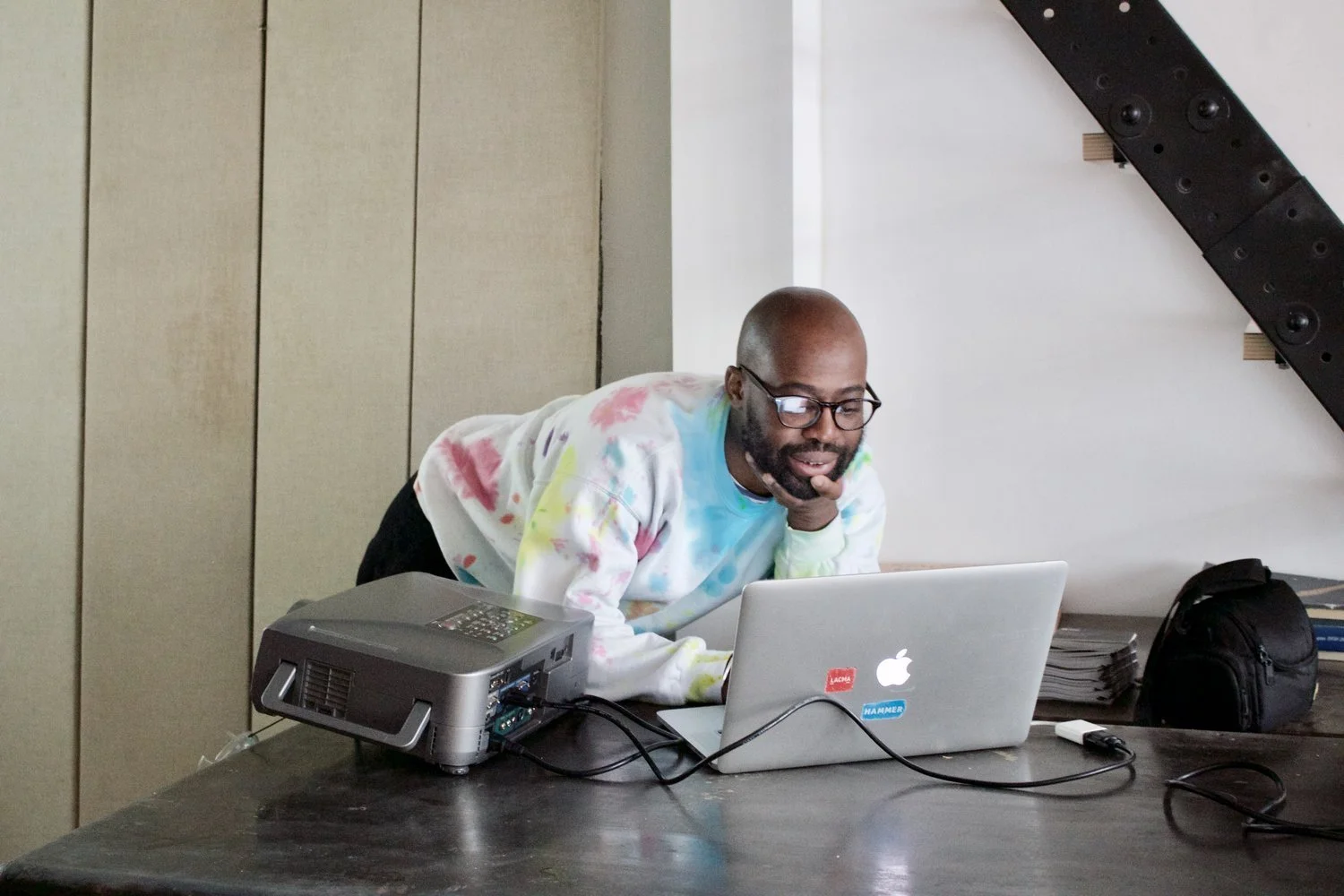
CURATORS & ARTISTS PRESENTATION
PORTSMOUTH, ENGLAND AT ASPEX GALLERY
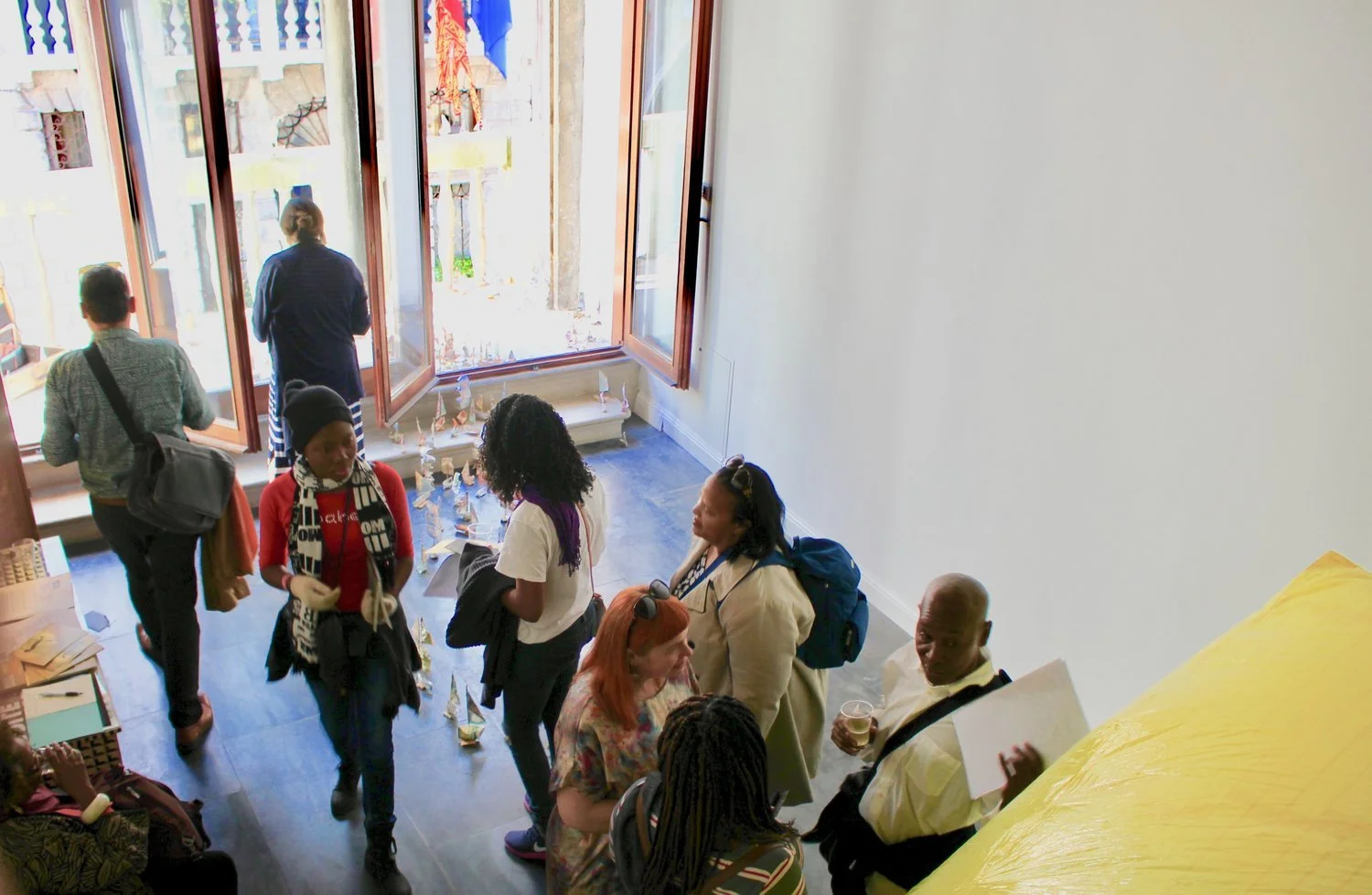
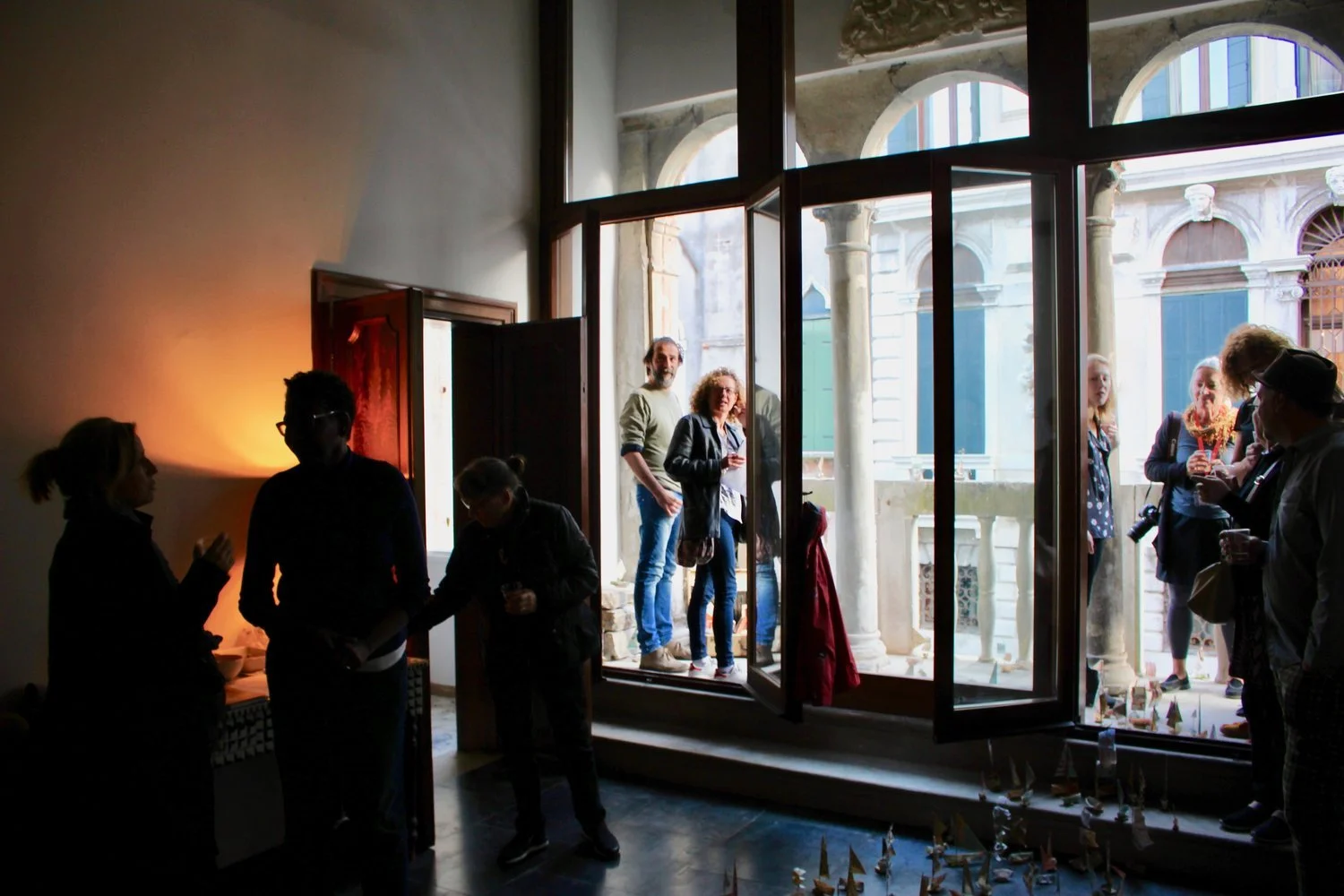
POP-UP SHOW, INSTALL, RECEPTION, & CLEAN UP
VENICE, ITALY
SYRACUSE, NY - [GENERATOR ROUND 2]
Point of Contact Gallery, October 19 - December 15, 2017